Live Type Research in Barcelona

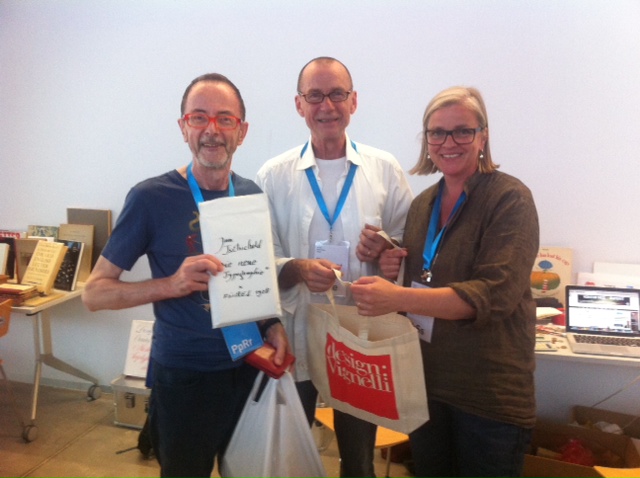
For those who followed my talk this morning at ATypI in Barcelona, here are some updates as they unfolded just in the past hour. Thankfully, Nina Stössinger and Dan Reynolds told me after my talk that the (OMG-excellent!) Antikvariat Morris stand at the conference had a copy of the first edition of Tschichold’s Neue Typographie on offer.

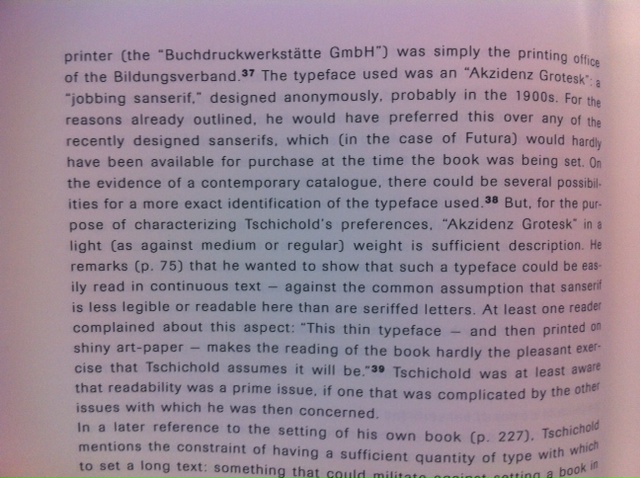
This was the book Maxim Zhukov inquired about, if I knew whether Ideal-Grotesk or Venus was used. He did not include any images of it in his emails (and why I did not ask for some or researched photos more thoroughly at that point I do not know, sloppy practical type historian). Anyway. While I was already attending the conference, I exchanged some emails with Stephan Müller of Lineto about this book, too, and how he always liked the typeface it was set in — Neue Moderne Grotesk — of which he made a revival.

So, was Die Neue Typographie set in Venus/Ideal or a NMG/Aurora face? A peek into Glenn’s copy revealed, it was a Wagner face of whatever name or version. Since the book was printed in Berlin, maybe from a local foundry there, e.g. Böttger/Berthold who carried that design under the name Breite Grotesk P. Robin Kinross writes in his introduction to the English edition that they used “a” Akzidenz-Grotesk. Haas’s version of NMG was called like this though I find it unlikely that a printer is Berlin acquired their type from Basel.

Below my poor phone photos. I could not afford to actually buy the book, but as I was kneeing there taking the snapshots, Pierre came around and said, he’s going to buy it now and I can come take good photos of it later in Strasbourg.

This is why I LOVE type research, and our international type community!

Typeradio Interview

My friends at Typeradio posted an interview with me this week which we recorded last December in Saarbrücken when Liza and Donald were over for a workshop at HBKsaar. Among other things, we talked about how I got into typography, Helvetica, Fonts In Use and typeface classification.


Students and font licenses

Below, a comment from a Typedrawers discussion from last year that sparked my list of educational discounts for fonts. Recently, a friend who will take a new teaching position in the fall, asked my advice about classroom licenses and purchasing font collections, so perhaps this note is of help to more people here, too. 


I teach undergraduate and graduate students and I am very sure all of them but maybe the very beginners have/horde collections of (free) fonts I don’t want to know how and where they got them from. But I am totally to blame for that, too, at least in parts. Because I want them to practise choosing (the right) typefaces as much as possible, and to look beyond the tellerrand of fonts that come with the OS or Adobe applications. (These are actually almost banned by me). We have quite a big collection of classic typefaces (Font Folio and URW) and some hand full of newer typefaces, but I also want them to learn how to research what type foundries and offerings are out there, what fonts cost, how they can find the right typeface for their design (not one for the whole group), and also how to test these typefaces and make mockups without having the font files. Some developed really impressive skills in photoshopping MyFonts gifs and hacking FontShops rendering engine for their copy.

I like your idea [Silas Dilworth’s in the orginal message] of assigning a collection of fonts, and especially the class-room-multi-user idea (if I understood it correctly). But at the end of the day it all boils down to art schools without tuition fee, like in Germany, don’t have the funds to buy font licenses on a regular basis. The problem is not so much to get a license for 1–5 computers but to estimate and oversee bulk licenses, and come up with the budget for it. The students are usually using their own laptops in school. We for instance don’t have any school workstations or computer pools anymore where I would install the fonts. How many seats do I have to get with a changing number of students between 4 and 30? Are the foundries OK with the students installing them on their private computes, not the school machines? We don’t have a bookstore and our school is very small. Nobody wants to do the extra admin work, even I am not keen on that although I would do everything I possibly can to mediate in this matter.

Of course, students buy paper, computers, pencils and books for school, too, but only rarely are they willing to pay for font licenses for school assignments (some older students are starting to, though, my graduands did for their own final projects for instance). They want to try out the fonts before they buy, and I can understand that. It is only reasonably experienced designers who can judge a typeface by its specimen and imaging how it will behave in their real life environment, in their given language, before buying the cat in the bag. Stephen started this thread of foundry discounts on here, that is very helpful and I passed this on to the students. But honestly – they are not really helped with 10% off, they’d need at least 50% off to convince them. And then you have the problem again of what happens when they graduate. Are they to keep the license forever they paid at a student rate? Webfonts with trial licenses are at an advantage here, and I guess that all font-serving technologies could implement a testing-deal for matriculated students quite easily. Less so the small independent foundries I especially want the students to get to know of.

The best I seem to can do at the moment is emphasize and repeat every single day that it may be OK to show me this design idea with this font in class, but whenever they do something for the outside world or get paid for a design, they absolutely have to have their own license for the fonts they use. And I tell them how I obtained my collection of typefaces: by whenever I was asked to do something for a friend, family member or NGO for free (which was plenty), I said I would agree to go without payment but they have to pay for the font license. That always worked (and now I have quite a collection of script fonts :/ ).

Auto-optical

Size specific designs are (luckily) more popular and talked about than ever before. Users as well as type and software companies are discussing how the use of different design variants can be made easier and more intuitive, or best even automated, so that if you set the typeface in a certain font-size, the appropriate optical size designed for this size range is chosen automatically.

In theory, this is a great idea. But the problem I see is, you can’t take the point size specified in the document as the only reference to determine what the ideal optical size to use would be. What if the user is setting a sign intended to be seen/read from further away? Or a poster, or boards for an exhibition? He might choose a large nominal point size which then prompts the application to switch to a deck or display variant, but the actual piece will be read at considerably larger reading distance = perceived in a much smaller size, more comparable to average body size at average sofa conditions. How to factor this in in an automated system? Minutes of arc?


Mike

mike

Nick: I told Stephen the other day that I want to be Mike Parker when I grow up.
Indra: I told DB that I want to be Mike Parker, too. And DB told me that Kent wants to be Mike Parker.
Nick: I think everyone does. How could you not.


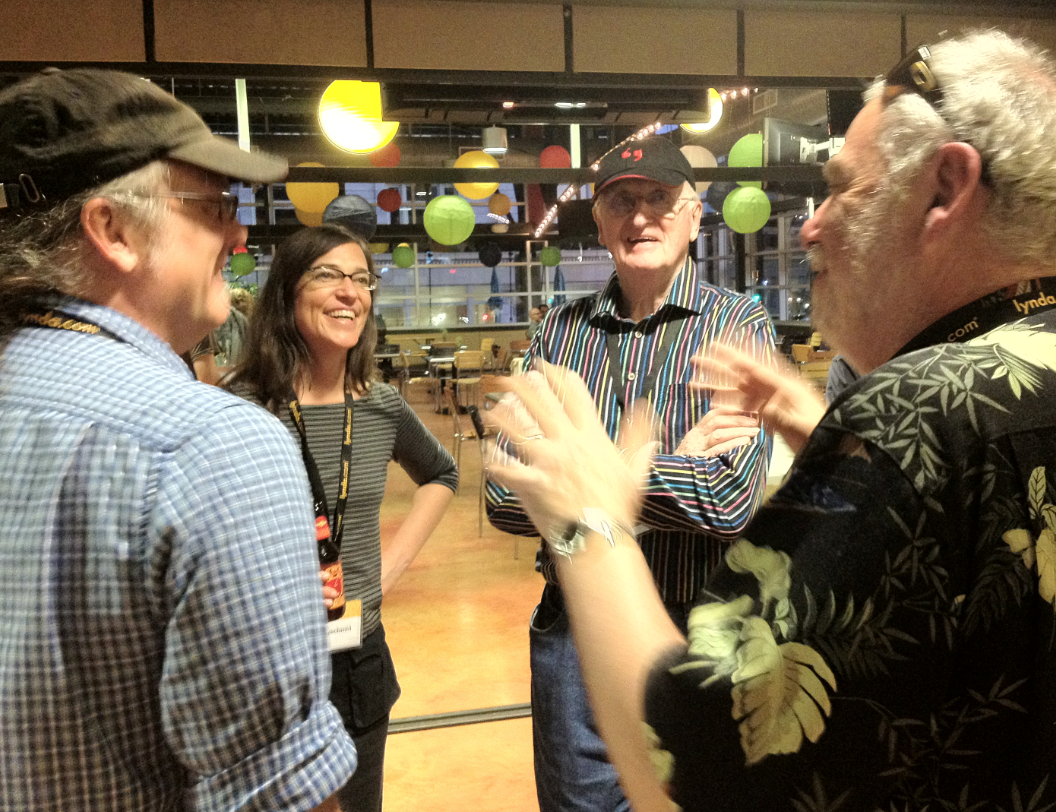
Photo by Jay Rutherford, TypeCon Milwaukee August 2012


Die Römische Linkskursive

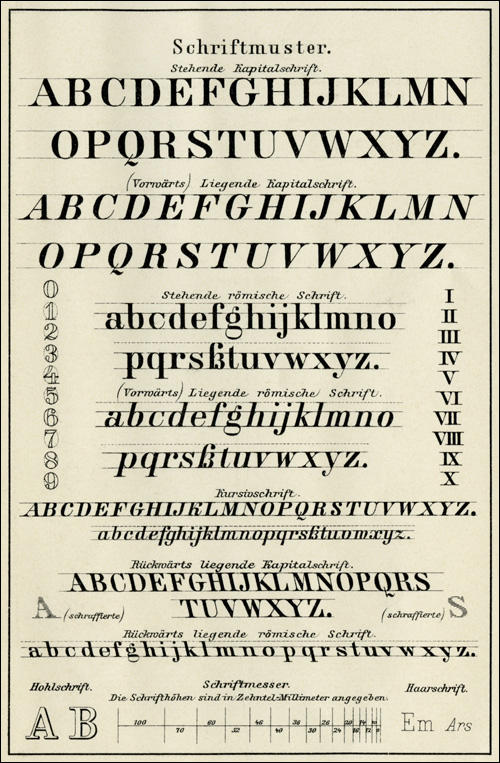
Gunther Schmidt is tracking the traces of the “linkskursiv” roman and italic lettering style, commonly used on maps, for years now. We were in contact a couple of times about this. Via three articles on his blog, he was able to dig up quite some information including this great lettering specimen from the “Musterblätter für topographische Arbeiten des Königlich Preu­ßischen General­stabs”, 11. edition from 1904.

120921_Roemisch_Linkskursiv_01

Check out his post (German) for more wonderful images from this cartography guide.


hurst

Please. I don’t want to read any more Bringhurst quotes in ‘typography on the web’ and ‘choosing fonts’ articles. Especially not the one with typography exists to honor content. Get beyond Bringhurst, people.


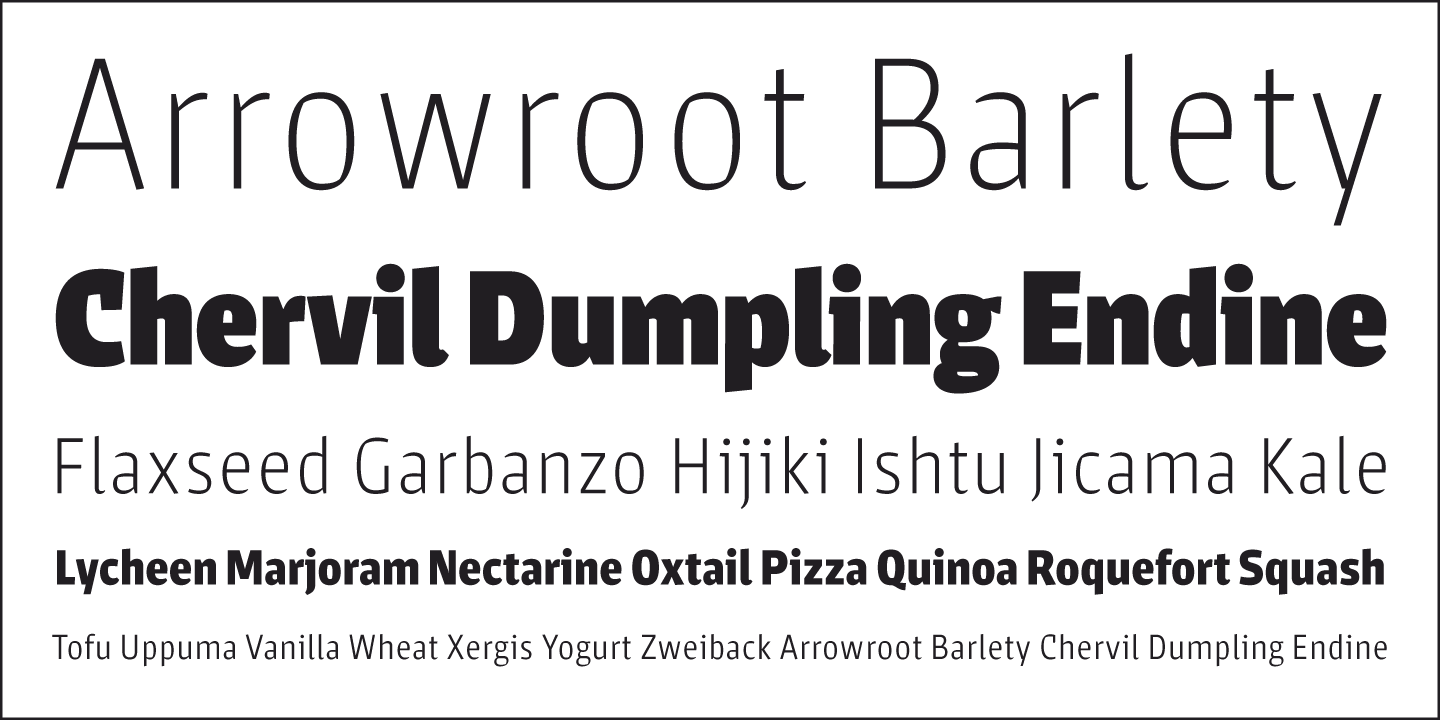
Sarre by Sascha Timplan

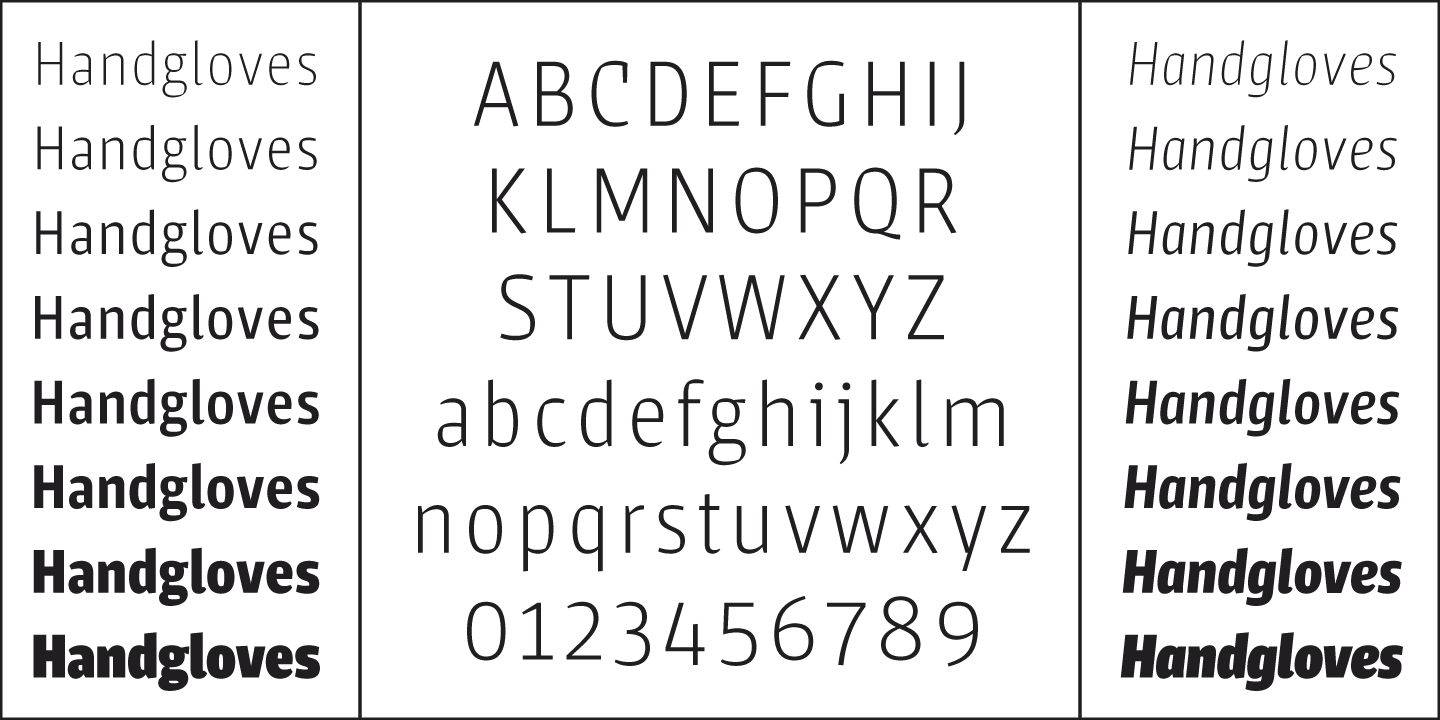
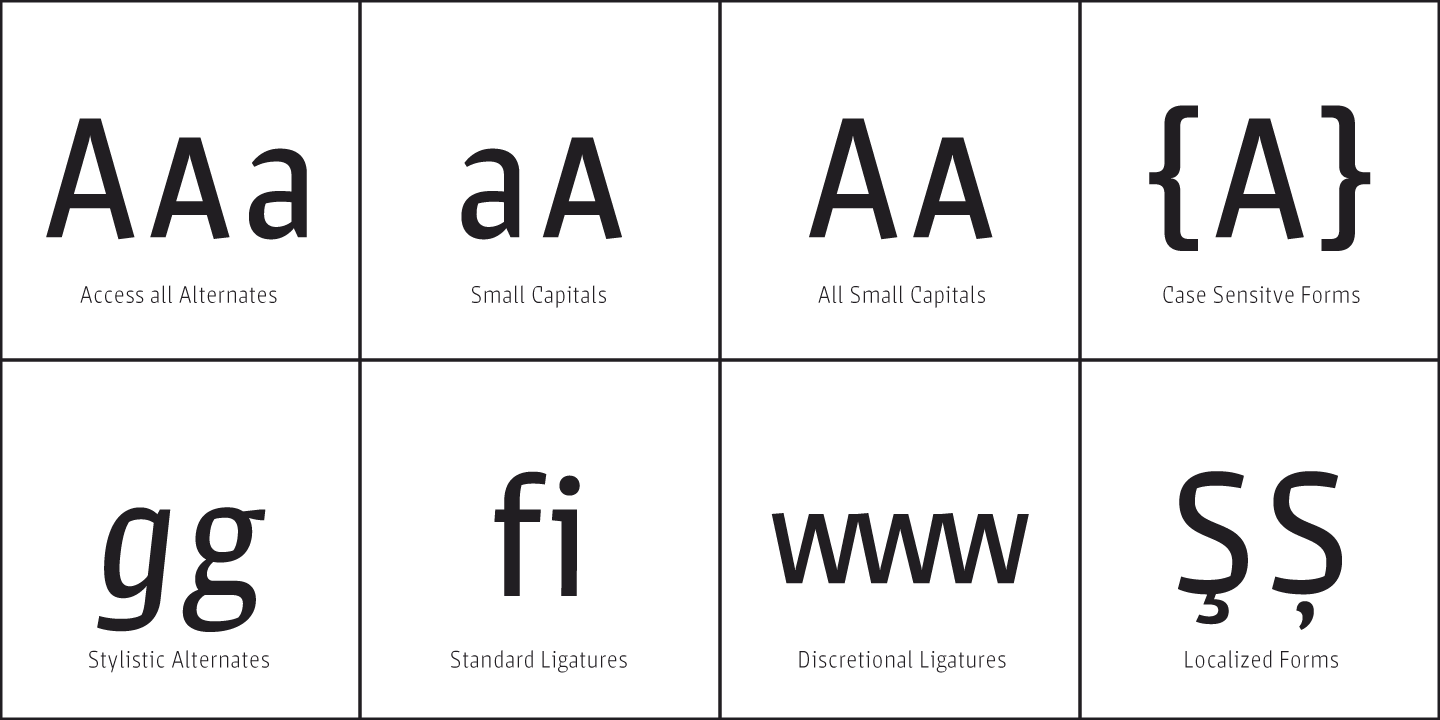
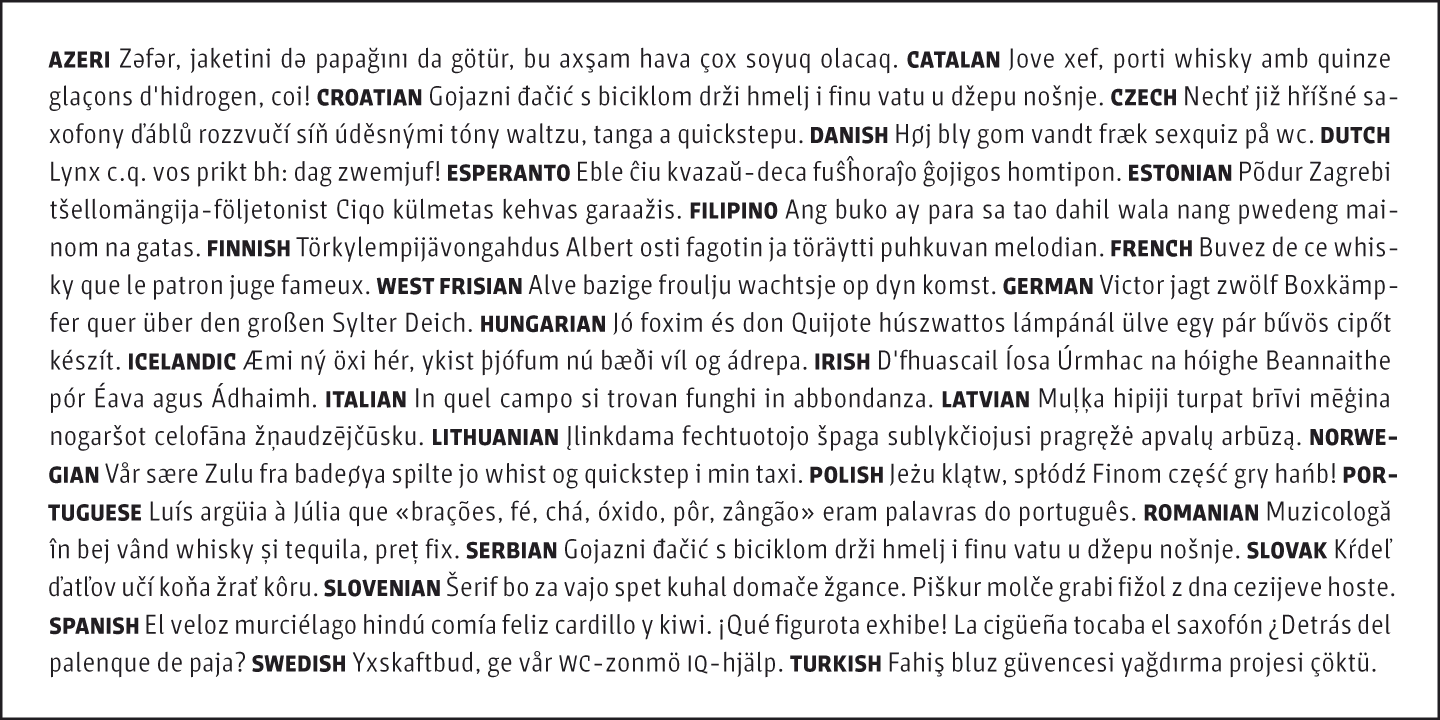
If I was to write about one typeface published in 2013, it would be Sarre by Sascha Timplan of Stereotypes. A bit random, and because I have a soft spot for these compact sans-serifs with angular notches, but an embarrassingly huge part because of its name and regional associations I have. And that although I’m a contributor and supporter of LTypI — mocking the choice of a typefaces for stuff of the same name. But Sarre fits Sarre so well.


All specimen images from MyFonts.


Sarre is the French name for a small region in the outer southern West of Germany at the border to France, spreading along the river Saar/Sarre and mostly made up of the state of Saarland. I work and live there, in Saarbrücken, and so does Sascha Timplan, in nearby Trier.

Given the fact that I know how naming typefaces often happens, it’s ridiculous how much of this region’s characteristics I believe to see in the design — vernacular, industrial, rough, simple but candid and open-minded like its people, quirky Germanness in a corner of inescapable internationality, expressed in edgy curves, others soft and gentle, and in a weight range that is so Sarre: delicate light-heartedness to super heavy punchiness. Coal and culture. Okay, I’ll stop.

I have no idea if Sascha had any of this even remotely in mind or set out to design something for Sarre, instead of just naming his independently conceived typeface after it. We never talked about it, but he mentions the river in his detailed specimen PDF. Also, this is not really a review. I didn’t properly try out Sarre yet, although I downloaded the test version available on MyFonts here (all the way down at the bottom).

By singling out Saare from a plenty of excellent typefaces issued last year, I also want to recognize the continuously notable work coming from Sascha. He just graduated college last year but can already show an impressive array of typeface designs, some extensive and versatile, others just plain fun headline faces, combining ideas that are in the air with an unbiased, easygoing twist. Here’s to more from him in 2014.


Taking Over Type Foundries

Type foundries taking over other type foundries is a common thing in type history, but Linotype wasn’t the company at the front of actions.

Stempel:
1897 takes over Juxberg-Rust, Offenbach
1915 takes over Roos & Junge, Offenbach
1919 takes over Hoffmeister, Leipzig
1919 takes over typefaces of Drugulin, Leipzig
1929 takes over Genzsch & Heyse, Hamburg
(together with Berthold and Bauer)
1933 acquires shares in Benjamin Krebs (Successors), Frankfurt
1954 takes over majority of shares of Haas, Münchenstein
(stakes since 1927)
1956 takes over rest of Klingspor shares (majority since 1917)
1960 takes over majority of shares Berthold & Stempel, Vienna
1970 takes over parts of C.E. Weber (rest to Johannes Wagner, Ingolstadt)
1978 Berthold and Stempel type founding activities handed off to Haas
1985 liquidation of Stempel AG through Linotype GmbH, Eschborn
1986 foundry type distribution and machinery goes to Schriftenservice Stempel / Rainer Gerstenberg
1989 Linotype takes over Haas and hands off type founding to Walter Fruttiger (Fruttiger AG)

Haas:
1978 takes over Olive, Marseille
1972 takes over Deberny & Peignot, Paris
1982 takes over Grafisk Compagni, Kopenhagen
1989 Linotype liquidates Haas and takes over names and right, type founding goes to Fruttiger AG, Münchenstein
1990 Fruttiger AG takes over rests of Società Nebiolo, Turin (closed 1978)

Linotype:
1963 takes over rest of Genzsch & Heyse, Hamburg with Stempel
1986 takes over Stempel AG, Frankfurt (majority of shares since 1941)